Where these pictures have been taken?
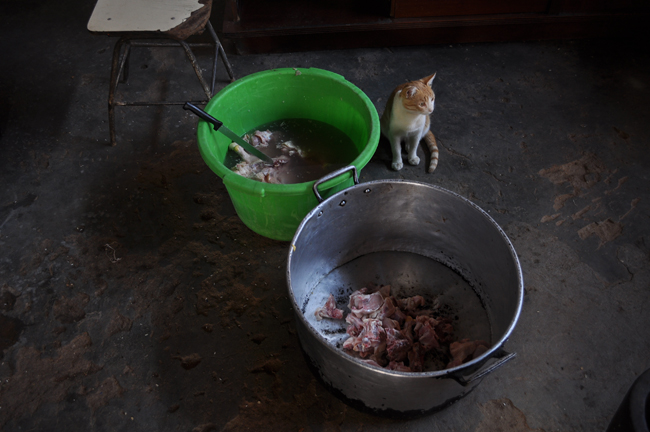
From May to August 2010, for an illustrated book project called "Vozes de Nós", I went to three African countries: Guinea Bissau, Angola and São Tomé and Principe. Countries I know well, having been there repeatedly since 2000. In each of these countries, I have coordinated illustration/writing workshops and conducted a lot of interviews. Here, I report the daily life of workshops. I took these photos between two workshops, first for my own pleasure, but also for the information they contain.
How the book project called Vozes de Nos/Our voices, started?
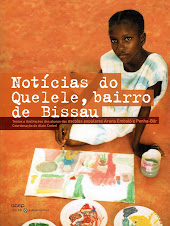
Alone and with two writers, Pedro Rosa Mendes and Jean-Yves Loude, I have already published some books about these countries. One of them: “Noticias do Quelele, bairro de Bissau” (News from Quelele) is at the origin of this project.
As an author and illustrator publishing for several years in the Portuguese market, I noticed the lack of books about the former Portuguese colonies in Africa. So I decided to start a book collection project about Guinea Bissau, Angola, Cape Verde, Mozambique and Sao Tome. The idea was to produce books that tell the African reality rather than rantings written by a European artist. For this reason, I thought it would be more interesting to let the Africans themselves write and illustrate these books. In 2003, I went to Bissau to start my first illustration/writing workshop. Four years after I managed to publish, “Noticias do Quelele” with the support of a Portuguese NGO.
In 2007, the Portuguese book market was too small and too timid for projects of this sort, and the collection has never emerged. Myself, I moved to Baltimore the same year.
Despite everything, I wholeheartedly wanted to continue this project. In 2009, I received the support of NGOs mentioned below, so I could come back to Africa. The substance of the project has changed somewhat but is still about the African point of view, and not mere fiction created by a Western artist.
For that project, I received an economic and a logistic support from several Non-Governmental Organizations, or NGOs: ACEP in Portugal, AMIC in Guinea, OKUTIUKA in Angola, and NOVO FUTURO in São Tomé. The community of Portuguese Language Countries, CPLP, and the Gulbenkian Foundation has assumed much of the funding.
In January 2011, the interviews, their drawings and my photographs have been be published by ACEP.